
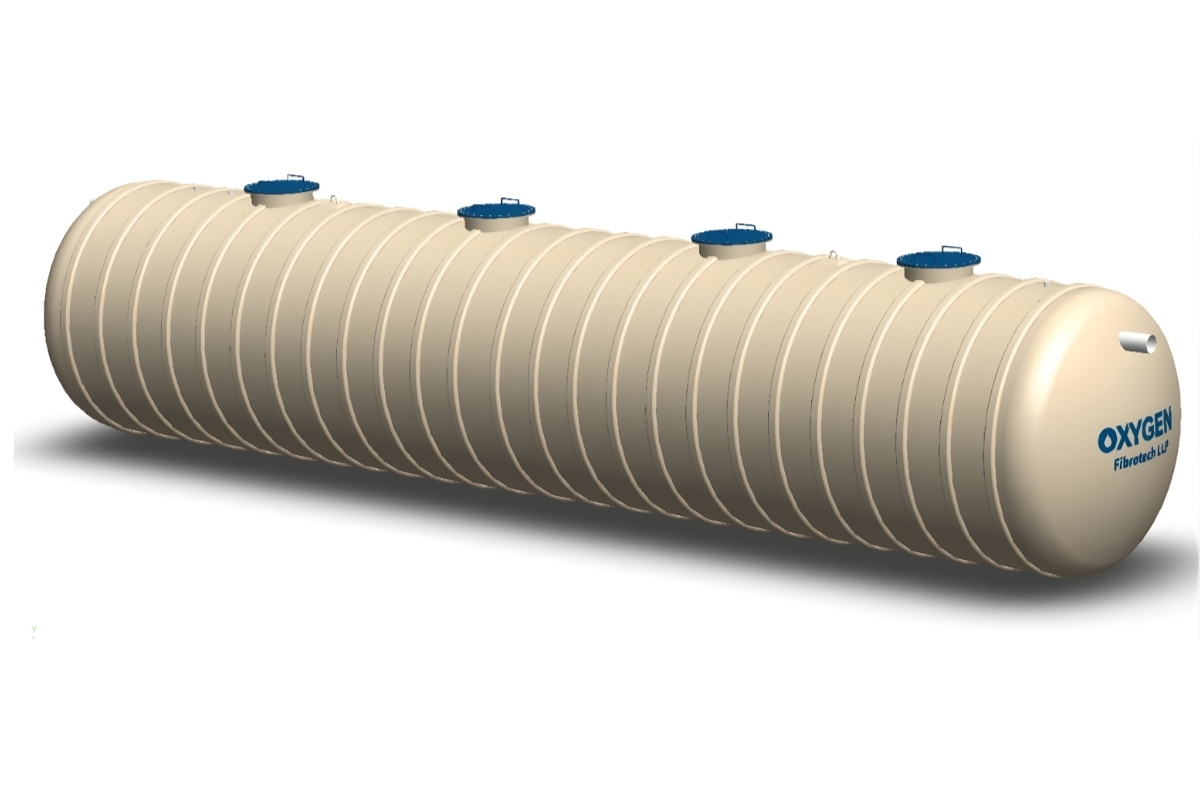
STP System Specifications
| Capacity | 10 KLD to 200 KLD and more |
|---|---|
| Inlet / Outlet Sizes | 4” / 6” (Customizable) |
| Chambers | 3 or 4 Compartments |
| Accessories | Manhole Cover, Air Blower, Submersible Pump, Control Panel, Tank Installation Accessories, Internal Piping with PP Media |
| Application | Residential, Commercial, Industrial Sewage Treatment, Government Projects, etc. |
| Features | Odor-proof, Leak-proof, UV Resistant |
Oxygen Fibrotech LLP offers advanced FRP Packaged Sewage Treatment Plants based on MBBR technology for efficient and reliable wastewater treatment. These systems are manufactured using strong FRP material and modern engineering to ensure durability, corrosion resistance, and long service life. The MBBR process uses specially designed bio media that provides a large surface area for microorganisms to grow and break down organic waste in sewage. This results in effective removal of pollutants and produces clear treated water suitable for reuse in gardening, flushing, and other non potable applications. Our packaged STP systems are compact, easy to install, and designed for long term sustainable wastewater management.
Advantages
- Compact and space saving design
- High efficiency in BOD and COD removal
- Low maintenance and easy operation
- Durable corrosion resistant FRP structure
Applications
Suitable for residential buildings, housing societies, hotels, resorts, hospitals, schools, commercial complexes, offices, industries, and small municipal wastewater treatment projects.
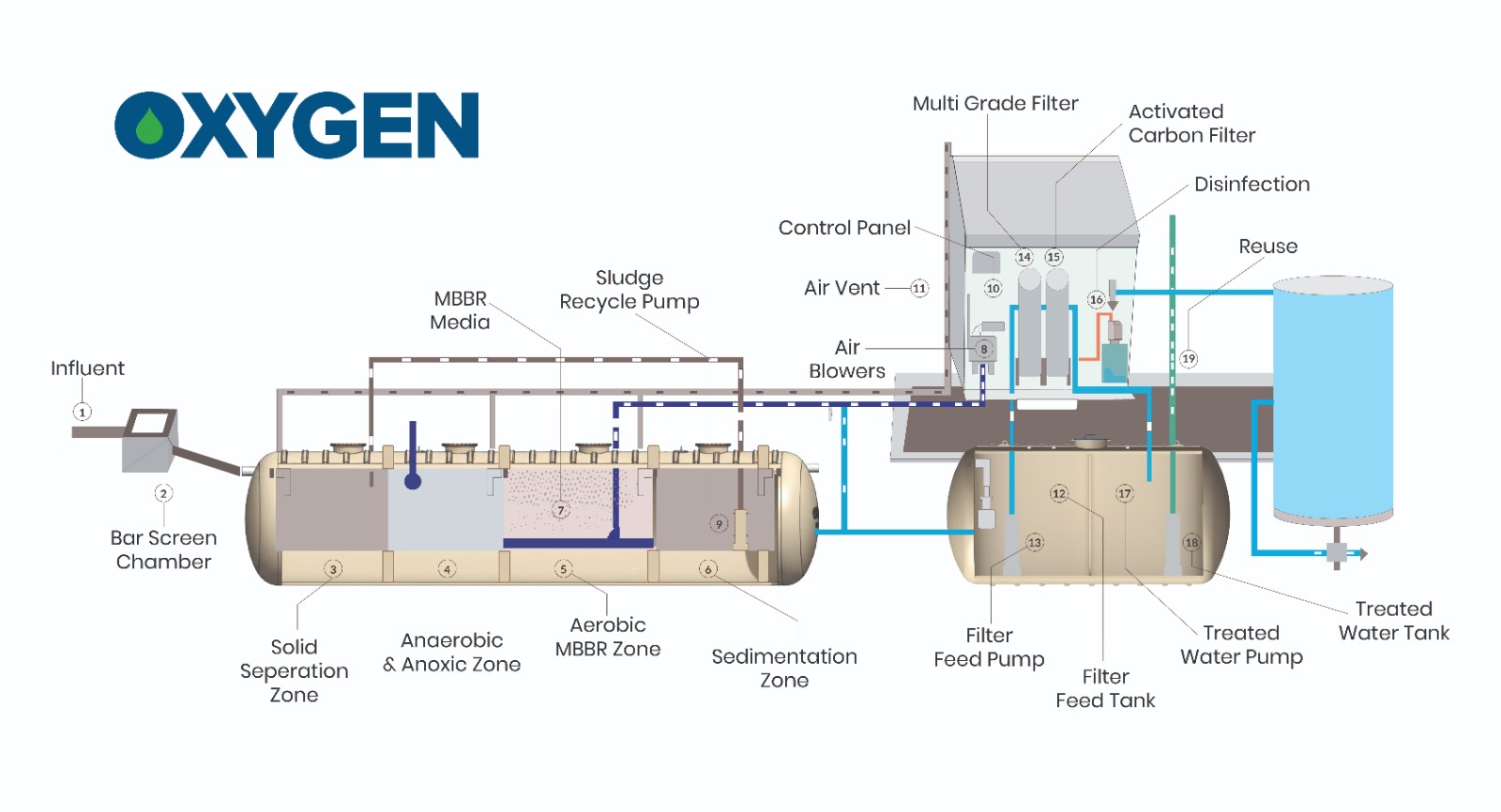
MBBR STP product
Process Flow Working Diagram (Simplified) Typical MBBR-based PSTP includes the following stages
Inlet → Bar Screen Chamber→ Removes grit, large solids, and floating materials from raw sewage, →Solid separation /Primary settling zone → Separate solids from liquid waste water →Anoxic Zone/Primary Settling, supports denitrification process — converts nitrates to nitrogen gas, reducing nitrogen content in effluent → Aeration Zone (MBBR Reactor) (Air diffusers/blowers supply oxygen to aerobic bacteria that further degrade remaining organic matter. Bacteria attached to media break down organic pollutants for BOD/COD reduction → Sedimentation/ Clarifier Zone, Separates suspended solids and clarifies treated water → Filter/Disinfection (TTP), Final polishing using sand/carbon filter and chlorination/UV disinfection.) → Treated Water Outlet
How to decide System Capacity (LPCD – Litres Per Capita Per Day)
- Toilet-Urinal (50 lpcd)
- Office/ Educational (80 lpcd)
- Residential/Industries (150 lpcd)
- keep 25% buffer capacity for future needs
Typical STP Performance Parameters
While a standard PSTP removes BOD/COD 85–90% of pollutants, Tertiary Treatment refines it further to achieve more than 90% reduction: It is thus an essential add-on for projects requiring water reuse.
| Parameter | Inlet Influent | Oxygen PSTP | PSTP with TTP |
|---|---|---|---|
| pH | 6.0 - 8.0 | 6.0 - 8.0 | 6.0 - 8.0 |
| BOD (mg/ltr) | 250 - 300 | < 20 | < 10 |
| COD (mg/ltr) | 500 - 100 | < 100 | < 50 |
| TSS (mg/Ltr) | 200 - 250 | < 50 | < 20 |
| TN (mg/Ltr) | 40 - 50 | 10 | 10 |
| Fecal coliform | 10000 | < 100 | < 100 |
Frequently asked question
We provide FRP solutions including water and chemical storage tanks, anaerobic septic tanks, packaged sewage treatment plants with optional tertiary treatment, and custom industrial FRP solutions.
FRP tanks are strong, lightweight, corrosion-resistant, leak-proof, and long-lasting. They are easy to install, require minimal maintenance, and are suitable for water storage, chemical storage, and wastewater treatment.
The right tank or system depends on your needs, such as the volume of water, number of users, and space available. Our team can help you select and design the best solution for your project.
Yes, we provide full support including site assessment, installation guidance, backfilling, and commissioning. We also offer maintenance and after-sales service to ensure your system works efficiently for years.
Yes, our FRP tanks are made from food-grade materials and have smooth interiors to prevent contamination. They are safe for storing drinking water and other liquids, ensuring hygiene and long-term durability.